









After deciding to quit my high-paying job to start a business at the age of 50, I returned to Vietnam after 30 years abroad. With little capital and the burden of supporting my daughter who was studying at university in Poland, I knew that starting a business was very risky, especially for someone as old as me. However, life is only once and we should live and work so that we have no regrets later. Therefore, I started a spice business with two young people from my old company and a friend in charge of accounting (although she studied Marketing).
First, product selection
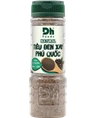
At that time, seasoning powder/seasoning powder was very popular in Vietnam and I thought why not make vegetable seasoning powder: less MSG, more dried vegetables, customers would definitely like it more than the seasoning powder products on the market. Vegetable seasoning powder products sell very well in Europe, especially the old Eastern European countries, so I thought it would have potential in Vietnam.
We looked for partners to supply raw materials and process. It sounds simple but at that time it was really hard to find, it took almost half a year to find a partner who agreed to process and package. At the same time, we implemented the design and negotiated with packaging suppliers, this part was easier because I had experience and relationships with partners from my old job. To save money on packaging, we decided to put the product in plastic jars and stick decals.
At that time, the market was mainly large jars, while the small jars were usually square, short and very ugly. We wanted the jars to be taller and slimmer, different from the competitors in the market and easier to display on the shelves. Finally, we found a manufacturer of plastic jars for the pharmaceutical industry and they agreed to produce small batches, with the Dh Foods logo printed on the jars.
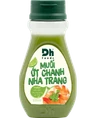
In addition to vegetable seasoning powder products, when going to the market we saw fruit dipping salt products, which were interesting to try, so we decided to develop this product because the production process is similar to vegetable seasoning powder.
.png)

Next, the GT channel sales campaign
While the letters sent to supermarkets were not answered, the distributors in Saigon were very happy to welcome me because of my relationship when working at the old company. However, they had one condition: Dh Foods had to recruit sales staff to sell the products. This good news made us very excited and immediately implemented the plan. Small distributors needed at least one sales staff, large distributors needed 4-5 sales staff, so we initially recruited nearly 20 sales staff. Orders started coming in, and with the momentum of development, we opened distributors in Hanoi and other provinces. The sales team expanded and so did the salary fund.
After 2-3 months of implementation, orders started to slow down. Grocery stores were slow to sell so they didn’t import more goods, and the sales team had no supervision so they worked inefficiently. Therefore, we started recruiting more sales supervisors to support the sales team.
The salary fund swelled while orders did not come in. By the end of 2013, I had spent more than half of my initial capital, even though I did not invest anything and saved as much as possible. What was even more frightening was that the distributors asked to recall the goods due to slow sales. We had to recall the near-expired goods, exchange them for new ones for the stores and continue to pay salaries to maintain the sales team.

Good news from MT channel
We received good news from the SuperBowl supermarket chain inviting us to negotiate. With the spirit of preparing for a tense negotiation, we went to meet them.
Surprisingly, SuperBowl did not ask for much, only requiring a deposit and being willing to place a large order of about 100 million VND, a very large number for a young company like Dh Foods.
However, when the first payment was due, they made excuses and delayed it. The following payments were similarly delayed. Finally, we received news that the SuperBowl system was bankrupt. They asked us to come and liquidate the contract, take back the near-expiry goods, and not pay for the sold goods. This was an expensive lesson for Dh Foods, leading to the decision not to sign the consignment contract again.
2013 ended with nearly 1 billion VND in sales but probably half of it was lost. The startup capital, despite savings, was almost gone. The vegetable seasoning products could not be sold, the fruit dipping salt products quickly became lumpy. The company's future was uncertain in terms of both products and development direction. 
.png) Fortunately, a large supermarket chain, through the introduction of a former employee, agreed to meet. After negotiation, they agreed to put Dh Foods products on trial sale. (To be continued)
Fortunately, a large supermarket chain, through the introduction of a former employee, agreed to meet. After negotiation, they agreed to put Dh Foods products on trial sale. (To be continued)

.png)
.png)