












- 1. “Going into business is not because of my entrepreneurial spirit, but because of the 700 USD debt that terrified me at the beginning of my life.”
- 2. In his heyday, he became an “instant noodle millionaire”, could buy anything he wanted but still didn’t feel… happy.
- 3. Silent financial lessons - Not in books, only in life
1. “Going into business is not because of my entrepreneurial spirit, but because of the 700 USD debt that terrified me at the beginning of my life.”
At the age of 19, with a full scholarship from the Government, do you remember what you brought in your suitcase to study in Poland?
After graduating from high school, I was one of the few outstanding students to receive a full scholarship to study abroad in Poland, majoring in IT, Management. That was in 1981 - a time when for my family, having enough to eat was a luxury. My luggage for the trip consisted of only an old wooden suitcase and a few sets of clothes provided by the government. I did not have any heavy luggage, but I carried with me a great desire to study in the West and change my life through knowledge.
Upon arrival, I continued to study Polish for another year before officially entering the 5-year program. The first days in a strange land, the biting cold made me feel even more deprived. I clearly remember the first month, having to wait until the scholarship was disbursed before daring to buy a thick coat or some basic personal items.
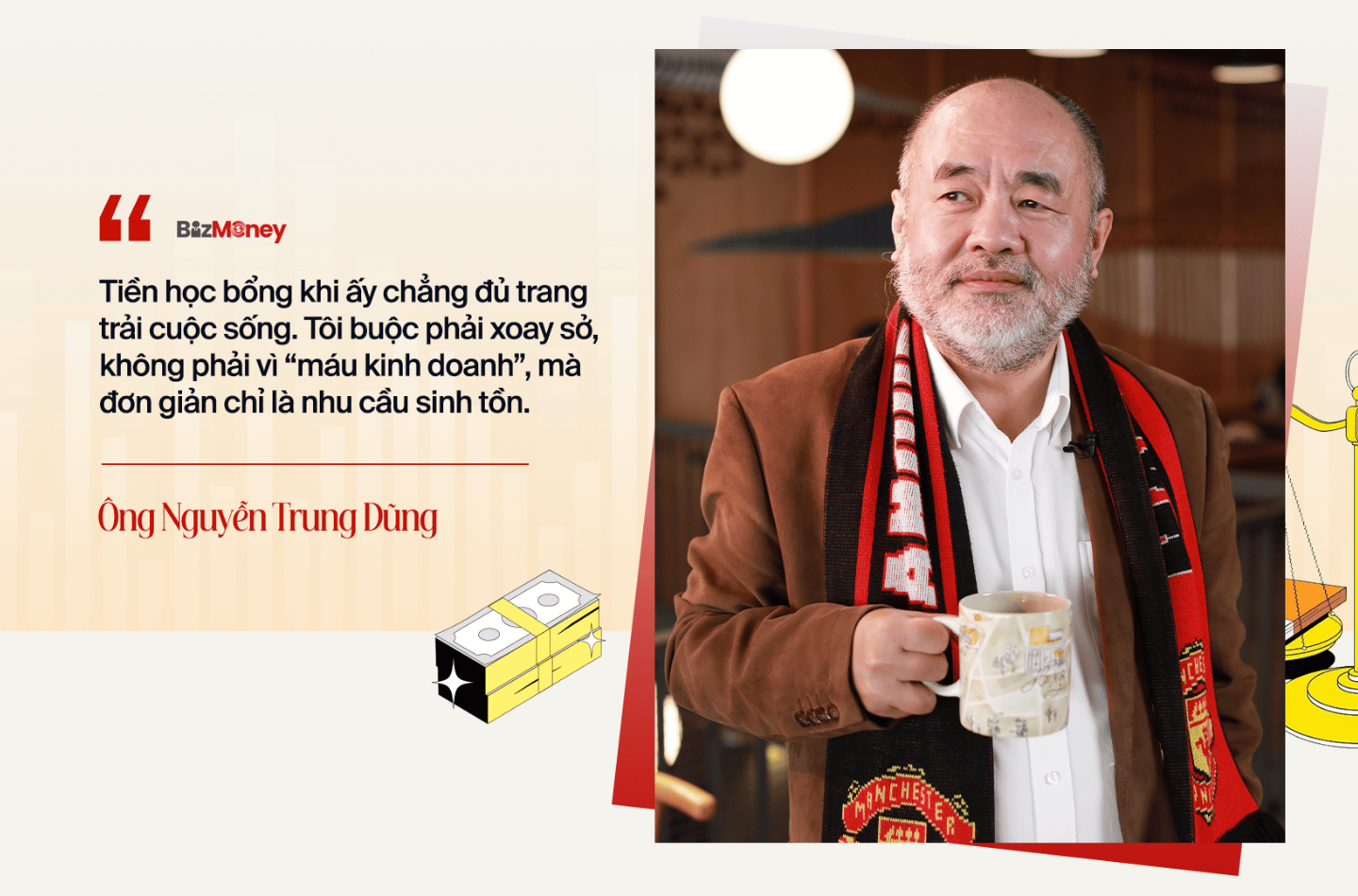
The scholarship money at that time was not enough to cover my living expenses. I had to manage, not because of my “business blood”, but simply because of the need to survive. So I started to bring goods from Poland to sell in Germany. At that time, the price gap between the two countries was very large, with some profits being 4 or 5 times higher. I imported everything, as long as it could be sold. The trade was small but it helped me learn how to look at the market from there.
Honestly, I didn’t save much. As a student, and for the first time abroad, the new life had so many attractions: travel, parties, friends from all over the world…
 Where did your first capital come from, was it luck, accumulation or an unexpected turn of events?
I was well-liked by my seniors because I played soccer well. In 1982, after finishing my language studies, while I was struggling to find a way to turn around my business, I was lucky enough to be lent $700 by a senior - a huge amount of money at that time. I took the money with two seniors to do business. We imported T-shirts with pictures of famous bands and sold them in Germany. The business seemed to go smoothly, but then it went wrong, and I was saddled with the entire $700 debt.
It took me a year of hard work to pay off the debt, regularly going to Germany to sell goods every two weeks. My situation was no different from a student who had just left his hometown for the capital, suddenly burdened with a debt equivalent to 1.5 billion VND. Finally paying it off was a small financial success, but mentally, I was exhausted. I decided to take a break for half a year and do nothing.
At the end of the second year, I ran out of money just as I was about to return home to visit my family. With no other choice, I continued to trade to earn money to buy plane tickets and gifts for my parents. However, when I got home, my father's words made me feel sad: "I sent you to school, not to trade." After hearing that, I told myself that I would put aside making money and rest for another year.
Those “international business” ventures were all out of necessity, not out of passion, I simply needed money to cover my living expenses. It was also because of those trades that I decided not to follow that path again because it was quite risky and damaging to my mental health.
 Having gone through some unforgettable early failures in life, what made you still choose to pursue a business career after graduation?
I think we are still destined to be together. After graduating with a Master's degree in 1989, I and four friends pooled capital to start a business. One person contributed $3,000, one person $1,500, and three people - including me - had nothing. I was assigned to go to Vietnam to find and purchase goods. We sold handicraft products and prospered very quickly after only two years. Although the business was growing, at that time, I was not rich because all the cash was in the goods. Later, our group of friends had conflicts and split up.
In early 1992, two friends and I decided to bring Vietnamese instant noodles to Poland to sell. We were the pioneers of this product in Poland. I drove a small car carrying several boxes of noodles, electric kettles, plastic bowls and chopsticks, paper towels, etc. to each dealer to sell. I asked permission to cook noodles for customers to eat in just 3 minutes. At first, the dealers only let me consign them, but later the goods moved very quickly and the business prospered. However, due to some conflicts in personal relationships, we broke up at the end of 1992.
This time, I was in debt of about 20,000 USD. Because all the goods were imported from Vietnam, I was the representative who took out the loan. Now they pushed the responsibility onto me, on "black and white paper", I was the one who signed. Being pushed into a corner, I had to go back to Poland to borrow money to pay off the debt, then the Vietnamese company would allow me to import more goods. I accepted the loan with an interest rate of 10%/month. After just over a year, I paid off all the debtors with an interest rate of 10%, and then borrowed again with an interest rate of 2%. After a few years, I was able to pay off all my debts.
2. In his heyday, he became an “instant noodle millionaire”, could buy anything he wanted but still didn’t feel… happy.
 Once you have paid off your debts and started saving, what did you start buying for yourself? Was it a collection of supercars, diamonds, luxury goods or real estate, like other tycoons, sir?
The business developed, the company went up, by early 1995, 1996, I had paid off all my debt after 4 years, had a lot of cash, was able to buy a house, buy a car, and spend comfortably.
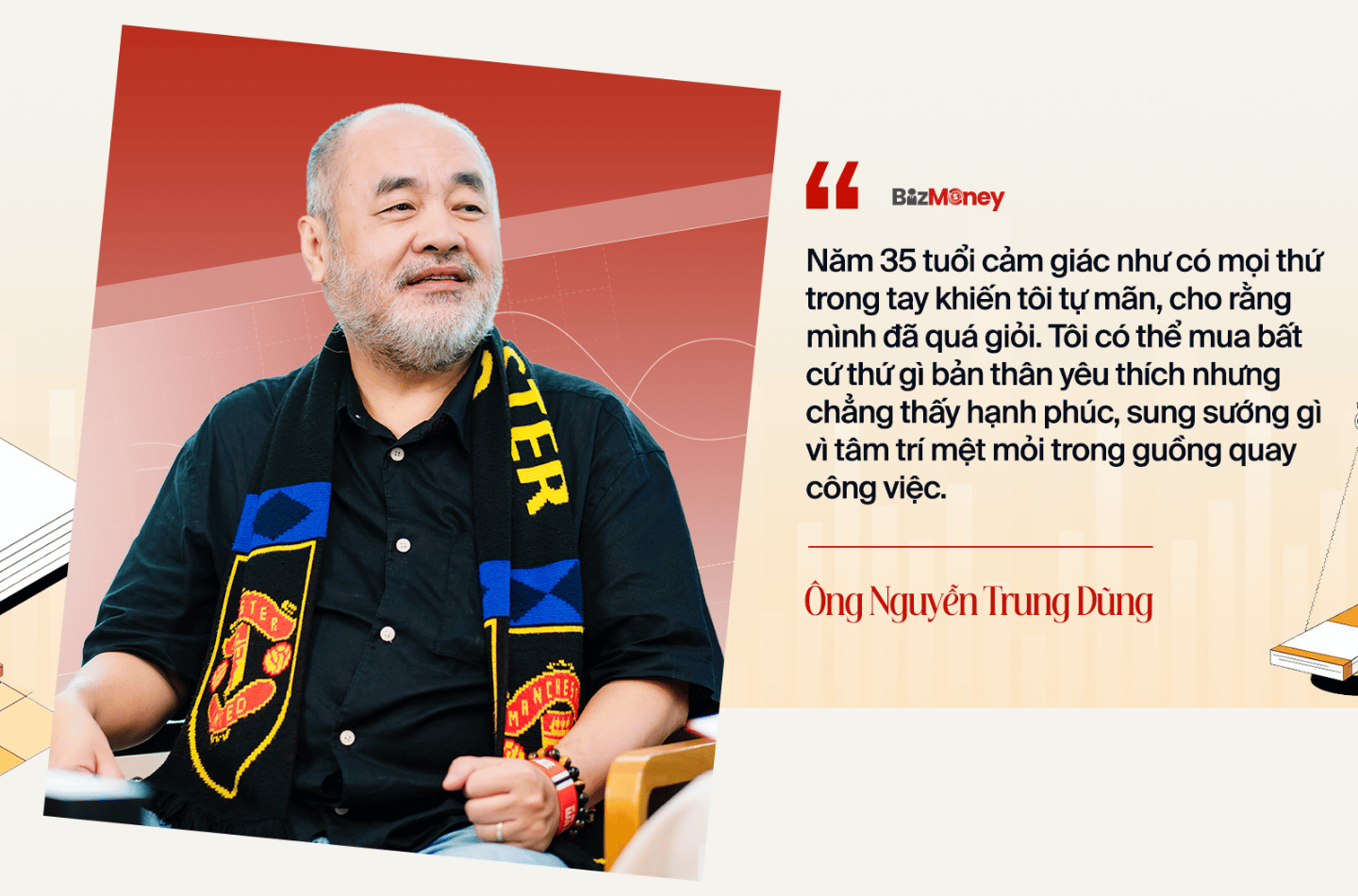
My company has about 100 people, with dozens of cars for sales staff. I also bought a house of more than 100 square meters, mainly investing in the company because sales increased, needed more working capital, while I could not borrow from the bank. I did not burn money on hobbies, did not like supercars, nor was I crazy about diamonds. At that time, I had a lot of money, reputation, and prestige in the Vietnamese community. At the age of 35, feeling like I had everything in my hands made me complacent, thinking that I was too good. I could buy anything I liked, but I did not feel happy or joyful because my mind was tired from the work cycle.
With a lot of money, I also started investing with friends and made a profit. In 1997, 1998, the economic situation fell into crisis but I did not feel anything because everything was on the rise. I also had the ambition to buy land to build a factory, create a production line even though I had no production experience. And I decided to borrow money, the bank happily accepted.
The factory costing about $2 million went into operation, profits increased but operating costs were very high each month. I spent all the money I made to pay the bank, which made me lose the joy of investing. At the same time, a shareholder wanted to withdraw 20% of the shares along with bank interest over the contribution period, so I borrowed cash at 2% interest per month to pay them back. At the same time, family relationships arose, making my mind even more depressed.
During a trip to Vietnam, a partner who was also a shareholder offered to sell the company and I decided to sell immediately. The buyer was a tycoon who traveled from Ukraine to Poland, the deal only lasted half an hour for 6.5 million USD. At the same time, the buyer asked me to be a shareholder holding 20% of the shares to be responsible for managing the company's operations in the early stages.
 With the huge amount of money after selling the company, how did he use it - enjoy life or invest later?
With 6.5 million USD, I paid off all my debts and had a lot of money left. I immediately bought a villa in the suburbs, with a land area of 17,000m2 and a house area of over 400m2. In that villa, there was a swimming pool, tennis court, fruit garden, pine forest, private garage, 3 cars,... I had 4 people supporting me 24/7 in the villa, including a maid, a gardener, a driver and a security guard. I also bought a motel on the mountain, also several hundred square meters, with a garden of several dozen hectares.
I thought that life was happy and fulfilling, but after only half a year, I got bored. Because before that, I was in an active state and then suddenly stopped working - like a retiree, so I felt disappointed. All day, I just spent time playing, relaxing, shopping, such as buying a new 21-inch LCD TV for 10,000 USD, or a sofa set that also cost more than 10,000 USD.
You have achieved great success in your startups. Have you ever been in a financial crisis? What lessons have you learned from that?
After a period of rest, I decided to start a business again. I planned to build a factory, import goods from Thailand, buy machinery from Korea for production, but faced a big change: the economic crisis in 2008. I needed a large amount of investment money but the market went down, the money was "dead" in real estate so I couldn't withdraw it. From a state of spending freely, I fell into a dead end, with no income, while having a lot of assets.
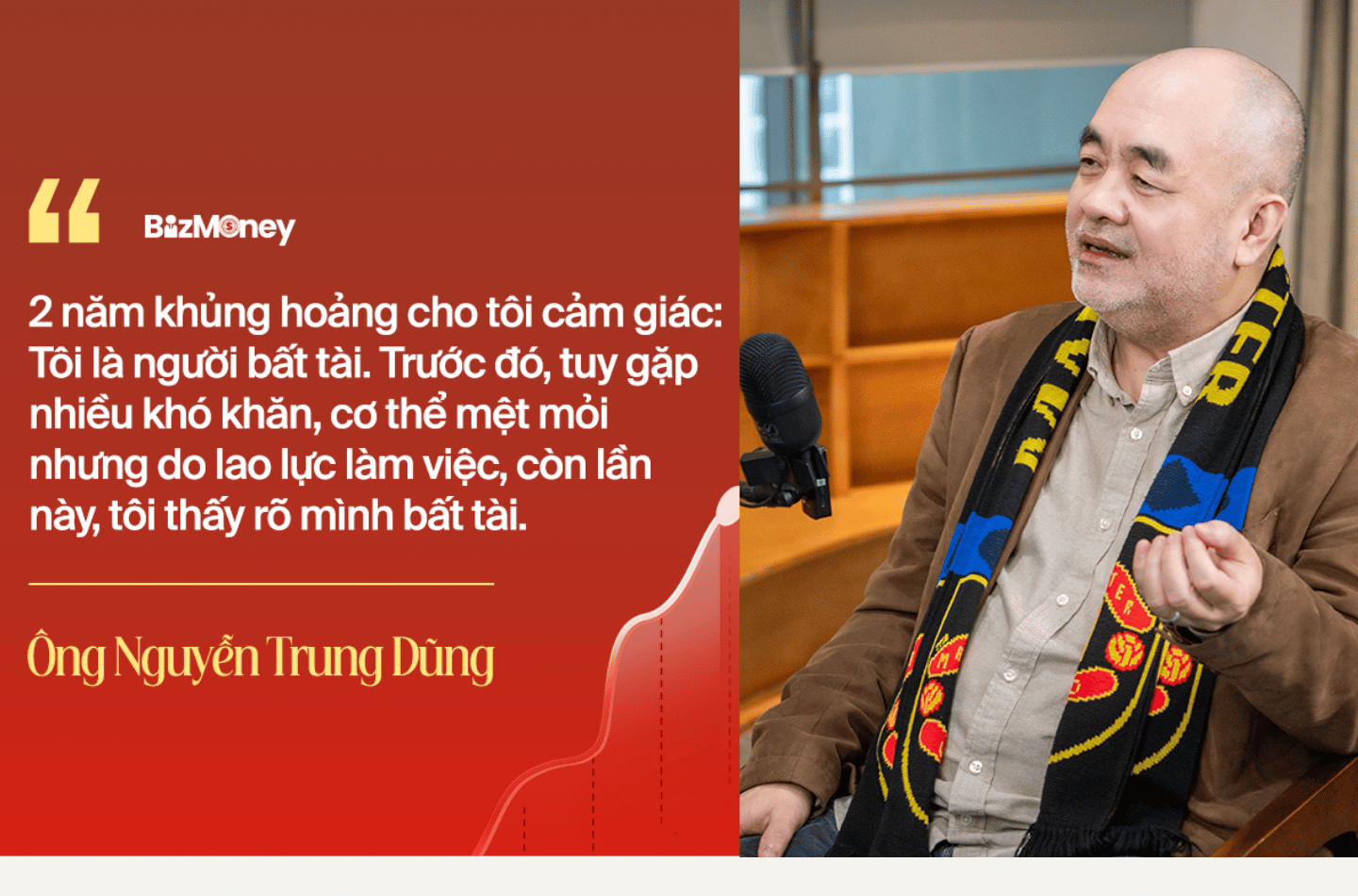
The 2 years of crisis made me feel: I am an incompetent person. Before, although I encountered many difficulties, my body was tired but it was because of hard work, but this time, I clearly saw that I was incompetent. I was quite subjective when I always thought that money was easy to make, assets could be sold at any time, so I did not have a cash reserve fund. As a result, the crisis in the family became more serious.
3. Silent financial lessons - Not in books, only in life
 Looking back on the journey you have traveled, how have your thoughts about finances changed over time?
After the bitterness of half my life, I returned to Vietnam with nothing, starting from zero: no house, no money, no friends, no relationships. I was invited to work for a company with an income of 200 million VND/month. If I were 30 years old, I would definitely choose this job. But at 50 years old, I chose to start a business with a salary of about 20 million VND/month. I traded a high salary for freedom, and I believe I can do it. And with the value of Dh Foods now, even if I work with a salary of 200 million VND and save up, it still won't be as good as it is now.
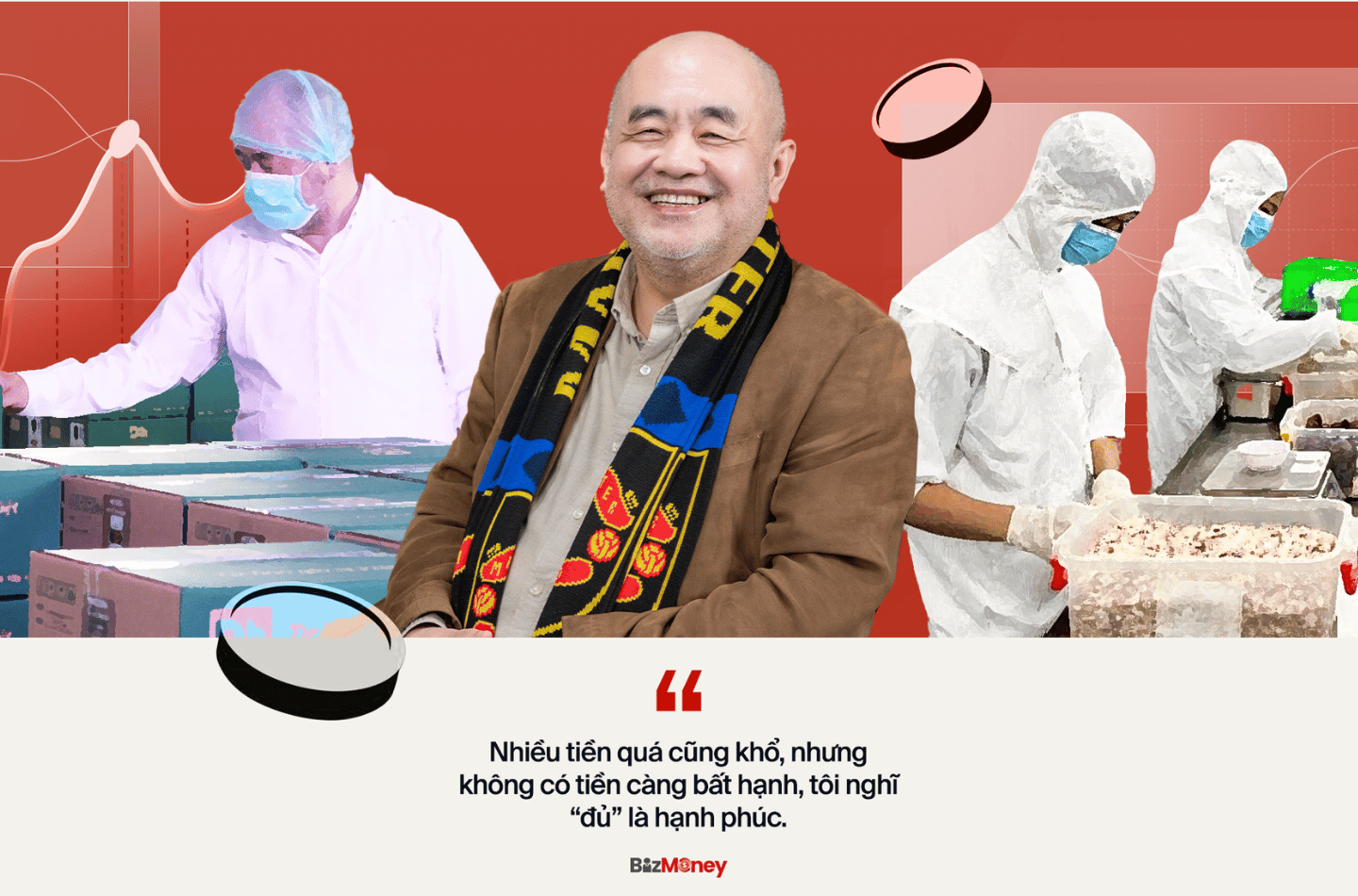
Second, I am greedy for wealth but not greedy enough for money. Even when I have a lot of money, I am not happy and do not see it as the purpose of life. Too much money is miserable, but not having money is even more miserable. I think "enough" is happiness. For me, "enough" is enough money to spend, to live, to buy whatever I want, without needing to own, without needing to prove it to anyone. That means I feel comfortable, life must be truly happy, when happy I will invest effectively.
What about debt, sir? When is debt a powerful lever, and when is it a case of facing danger?
In the past, I thought that borrowing was leverage, the more I could borrow, the better. But in my later startups, until today, I have not borrowed a single penny. I go step by step slowly but surely, not letting creditors pressure me, not being a slave to the bank or anyone. I work at my own pace, and over a period of 10 years, everything has grown well and steadily. When I am mentally relaxed, my employees are also not under pressure, which helps increase efficiency.
Currently, besides the Vietnamese spice business, do you invest in other channels such as real estate, stocks, securities,...?
I don't, because I don't have an understanding of these channels. My point of view is that I don't do things I'm not good at, lest it affects my cash flow. Learning and building an ecosystem in a completely new field is not something that can be done overnight. It's too risky, I don't play.
Cash flow is an extremely important concept, providing money for daily and monthly expenses. A company is assessed as “healthy” or not based on cash flow, not assets. Having assets that cannot be sold can easily collapse the company.
Do you think about leaving an inheritance to your children or grandchildren or do you have another view?
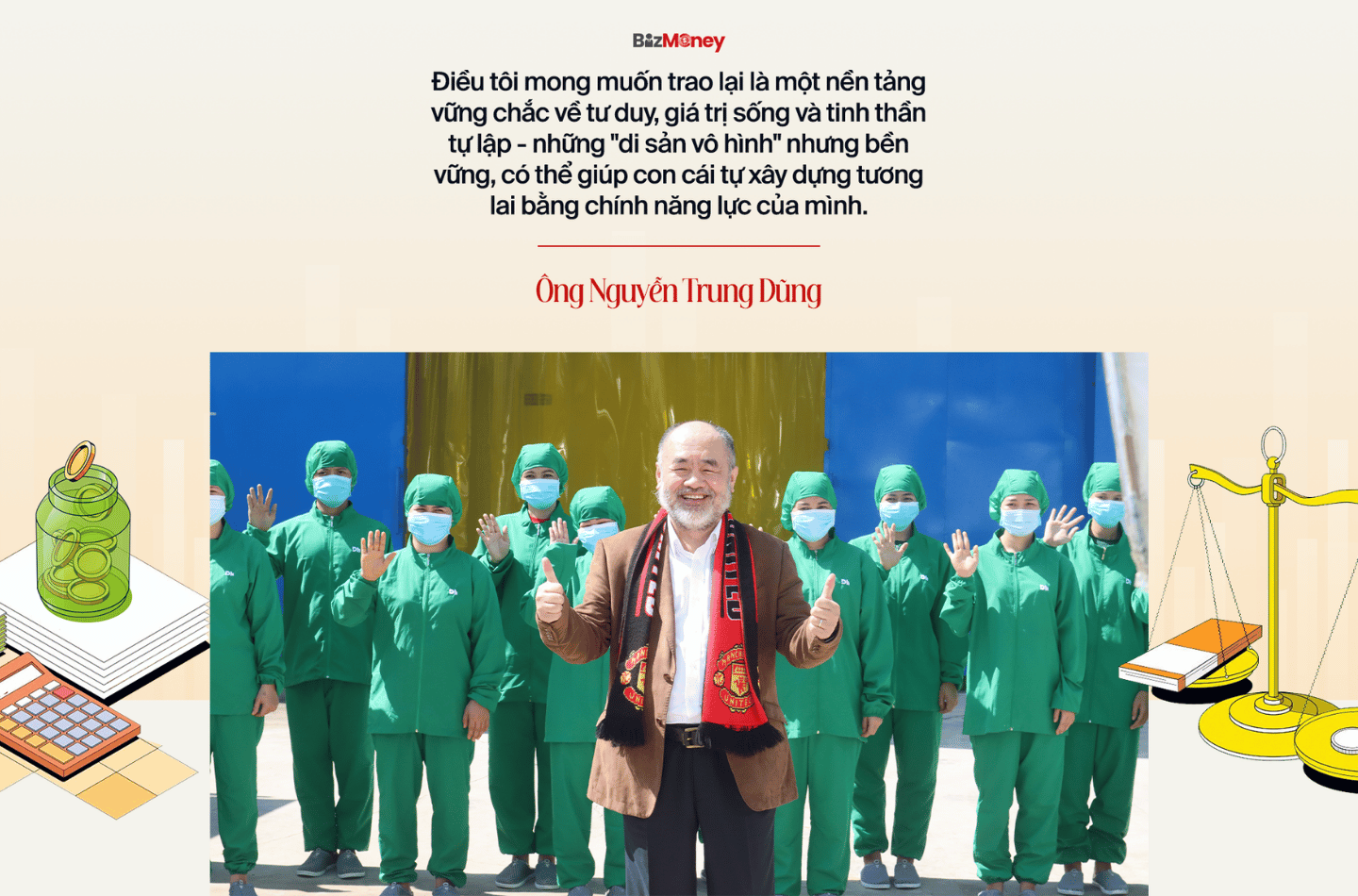
I believe that what is worth leaving for the next generation is not necessarily material assets or fixed money. What I want to pass on is a solid foundation of thinking, life values and independence - "invisible legacies" but sustainable, which can help children build their own future with their own abilities.
Are there any personal finance principles you share with your children, employees or young people looking for advice?
Save, save and save. First, save for emergencies because no one knows what tomorrow will bring. Second, save to create capital for investment and business plans. And finally, save to practice a disciplined mindset, not to follow impulsive consumption.
Thank you for the interesting conversation!
Source: Ung Ha Chi. (2025, July 22). Vietnamese Youth. CEO Nguyen Trung Dung: "I'm Rich But Not Crazy Enough About Money, I've Been Doing Business All Over Europe, I've Had A Lot Of Villas And Land, And I've Had Dozens Of Cars, Still Not Happy". https://thanhnienviet.vn/ong-trum-gia-vi-viet-tung-di-buon-khap-chau-au-biet-thu-va-dat-bat-ngan-o-to-vai-chuc-cai-van-khong-vui-toi-ham-giau-nhung-chua-du-do-me-tien-co-giai-doan-cam-thay-ban-than-bat-tai-209250723163316074.htm